
About Us
The Teacher
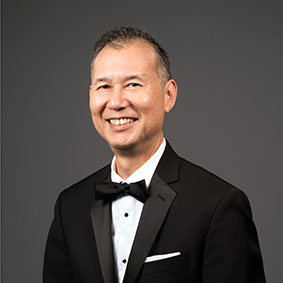 He is a graduate from Talent Education Institute Matsumoto, Japan with a degree in piano pedagogy and piano performance. There he studied for 4 years under the tutelage of Dr. Shinichi Suzuki, founder of the Suzuki Method, and Dr. Haruko Kataoka, co-developer of the Suzuki Piano Method. A. Kenji Suganuma is an early childhood education specialist, the creator of the Kenji Arts pedagogical piano method, the producer of a 25 item educational product line, and the owner of several intellectual properties.
He has more than 36 years teaching experience to adults and children (as young as 2) in piano performance and music education. He has organized public charity concerts for the elderly, teaches group and private piano instruction, as well as special classes of Mathematics & Music relationships.
His professional experience include:
- Judge for the National Federated Festivals and the Florida Music Teachers Association
- Summer music program instructor, Dr. Philips High School, Orlando FL (1987)
- Executive Board member of Tampa Music Teachers Association (2004-2006)
- Member of Friday Morning Musicale, Tampa FL
- Member of Royal Conservatory Music Development Program
- Committee Member of National Federation of Music Clubs, Bay Ridge District
The Piano Studio
The studio has side-by-side grand pianos in a 250 sq. ft. carpeted learning environment, with a seating section to accommodate observing guests. There is an activity area where students enjoy learning music theory through games and multi-sensory instruction. Our studio is equipped to digitally record and produce HD video and audio media of student performances for auditions or personal keepsakes. Adjacent is a waiting room and media center for recital video reviews and a listening library with over 11,000 musical selections. Lessons are conducted in a home residence where Asian custom is practiced and all are asked to remove their shoes before entering, with exceptions to those that require them.
The Academy
Academy of Musical Arts is dedicated to fulfilling the learning necessities of each student, with an objective to develop educational systems structured for all learning styles. We service the students by continuing to refine and develop through the practice of reflection and application. Our teaching system is flexible that caters to the needs of the student without compromising the structure of the lesson plan. At the academy, research is an on-going process where there is continued development, design, and innovative production for educational teaching systems and products. The Academy of Musical Arts offers structure in an organized learning system. Click here for more details.
What does the tuition include?
Your Tuition includes 34 private classes, 3 recitals, HD digital media file of each recital, Recital Evaluations, Monthly, Annual Progress Reports with graphs and the privilege to participate in National Federation of Music Clubs Annual Music Festival events.
What days and hours are piano lessons?
The Academy is open for classes Monday through Friday. Lesson times are usually scheduled after 3:00 p.m. Children not attending school or attending half days can be scheduled earlier in the day.
How long and how often are the piano lessons?
Children 5 years old and under will have a 30 minute lesson. Students 6 and older will need 60 minutes. Lessons are scheduled once a week.
What will my child learn?
Aside from learning piano performance, your child will have the opportunity to learn the skills and knowledge of basic music that include scales, arpeggios, chords, note reading, rhythm, harmony, and theory. Additionally, your child will have the opportunity to develop life skills. For more info visit our Top 10 Reasons to Study with the Academy page.
What kind of music will my child learn to play?
Beginning students learn folk songs from the North American culture. As the student advances, the repertoire moves to European classical and American contemporary composers.
How is your program different than other programs?
Our program uses its own curriculum and products that are exclusive to Kenji Arts method. Students learn rhythm using our patented learning system. We use a quantitative evaluation system to show student progress.
When can I enroll?
New students may enroll anytime. The Academy of Musical Arts academic calendar generally follows the Hillsborough County Public School calendar, beginning mid-August to the end of May. See the Academy of Musical Arts calendar on the home page. We are open during the Summer for group and individual classes.
What is my commitment?
This program is a long-term commitment. For new students entering after the Trial Period, there is a full year emotional commitment to experience of 1 years' piano lessons, recitals, and music events. It will take years to get the full benefit of our program because our academy uses a curriculum, products, and a method unlike any other.
How long does the average child take piano lessons?
In this school, the earlier a child starts the longer they will continue lessons. Most students who begin under six years old will continue into High School. The longest length a student enrolled in this academy was 16 years. One family was enrolled for 27 years by the time their youngest child graduated High School. Students beginning older than six, on average, will continue into Middle School or Junior High. The average among the length of study is about 7 to 10 years.
What is the advantage starting piano lesson at a young age?
Children who start young, learn fast and readily incorporate practice as a part of their daily activity. More experience contributes to high performance skills compared to their peers.
Science shows that the brain of a 3-year-old has twice as many brain "wiring" connections than the adult brain. If they are not used repeatedly, they are eliminated. Early childhood education increases the degree of neuroplasticity (the brain ability to reorganize neural pathways based on new experiences). Additionally, studies found that the musician brain have larger corpus callosum (the part connecting the left and right hemisphere of the brain) which may result in enhanced communication between the two halves of the brain.
Do you teach adults?
Yes. We offer a 12 week beginning course.
- 12 hour-long lessons
- Tuition is $624 (paid in 3 installments) plus the cost of supplies
- Learn to play your favorite piece in just weeks
- Customized lessons to meet your needs
- Learn how to read music, pop chords, and theory
History
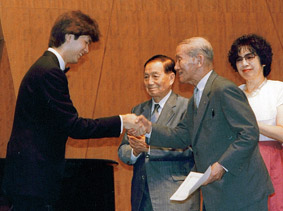 The Academy of Musical Arts has its roots in the Suzuki Method. Originally, the school started as a Suzuki Method piano school, adhering to the same standards and style in which it is conducted in Matsumoto, Japan. Early on, cultural differences made it necessary to add features to the program so that the students and parents could learn more effectively. Through the years, the program continued to be enhanced with the creation of specialized teaching aids, a theory book, and a beginning piano method with a repertoire to match the pedagogical system. In the mid-90's, the program ceased as a Suzuki Method when the differences were so much greater than the similarities. We now use the Kenji Arts Method.